≡Table of Contents
- 1.What Is a Cataract?
- 2.What Are the Early Symptoms of Cataract?
- 3.Who Is Most at Risk of Cataract?
- 4.Should You Wait Until the Cataract Is "Ripe"?
- 5.How Is Cataract Surgery Performed?
- 6.Which Intraocular Lens (IOL) Should You Choose?
- 7.How Long Does Recovery From Cataract Surgery Take?
- 8.Book Your Cataract Assessment at FIO Hospital

Prof. Dr. Mushtaq Ahmad Khattak
CEO FIO Hospitals & Consultant Ophthalmologist
What Is a Cataract?
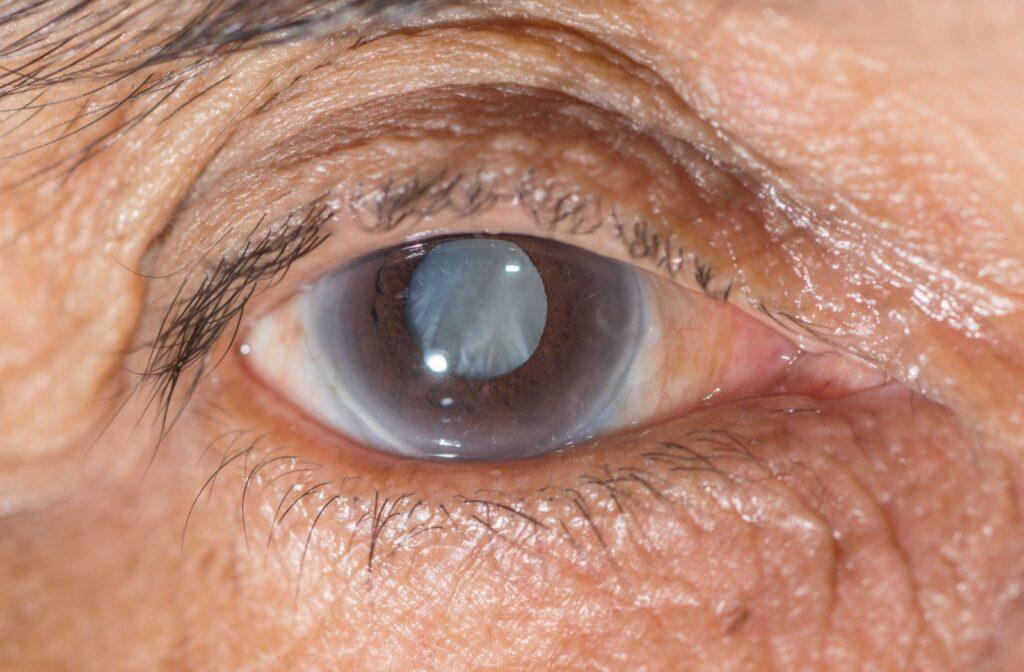
A cataract is the clouding of the eye's natural crystalline lens. The lens sits behind the pupil and focuses light onto the retina. With age, the proteins inside the lens clump together and scatter light instead of transmitting it cleanly. The result is blurred, dim, or hazy vision that no pair of glasses can fully correct. Cataract remains the single largest cause of avoidable blindness in Pakistan, yet it is also the most successfully treated eye condition in the world.
What Are the Early Symptoms of Cataract?
Cataracts develop slowly, so many patients adapt without realising how much vision they have lost. Watch for cloudy or filmy vision, glare and halos around headlights at night, colours that look faded or yellowed, frequent changes in your spectacle prescription, difficulty reading in low light, and double vision in one eye. If daily activities such as driving, reading the Quran, or recognising faces have become difficult, it is time for a detailed examination.
Who Is Most at Risk of Cataract?
Age is the main factor — most cataracts appear after 50. However, diabetes, prolonged steroid use, previous eye injury or surgery, high myopia, smoking, and heavy unprotected exposure to sunlight all accelerate the process. Congenital cataracts can also occur in newborns and require urgent paediatric assessment to prevent permanent amblyopia.
Should You Wait Until the Cataract Is "Ripe"?
Older generations were told to wait until the cataract was fully mature. That advice belonged to an era of large-incision surgery. With modern phacoemulsification, a soft early cataract is easier and safer to remove than a dense, rock-hard one. Advanced cataracts need more ultrasound energy, which stresses the cornea, lengthens surgery, and slows recovery. Early surgery means shorter operating time and faster visual rehabilitation.
How Is Cataract Surgery Performed?
Cataract surgery at FIO is a day-care procedure performed under topical anaesthetic drops — no injections and no general anaesthesia for the vast majority of patients. Through a micro-incision of about 2.2mm, the surgeon uses ultrasound energy to break up and aspirate the cloudy lens. A foldable intraocular lens (IOL) is then implanted into the natural lens capsule. The whole procedure takes 15 to 20 minutes, and the incision is usually self-sealing, needing no stitches.
Which Intraocular Lens (IOL) Should You Choose?
Monofocal IOLs give excellent distance vision, with reading glasses used for near work. Toric IOLs simultaneously correct pre-existing astigmatism. Multifocal and extended-depth-of-focus lenses provide functional vision at distance, intermediate, and near, reducing spectacle dependence significantly. Your surgeon will recommend the best option after biometry, corneal topography, and a discussion of your lifestyle and occupation.
How Long Does Recovery From Cataract Surgery Take?
Most patients notice clearer vision the very next morning. Antibiotic and anti-inflammatory drops are prescribed for four to six weeks. Avoid rubbing the eye, swimming, and heavy dust exposure for a month. Light household activity and walking can usually resume the next day. A follow-up schedule of day one, week one, and week four allows us to confirm healing and finalise any residual glasses prescription.
Book Your Cataract Assessment at FIO Hospital
If your vision has become cloudy or glare has started troubling you at night, book a comprehensive cataract evaluation at FIO Hospital Islamabad, Karachi, or Peshawar. Early assessment protects both your sight and your independence.
Book a comprehensive cataract surgery consultation at FIO Hospital, or see our Cataract Centre of Excellence. Appointments at all three branches can be made on our online booking page.