≡Table of Contents

Prof. Dr. Mushtaq Ahmad Khattak
CEO FIO Hospitals & Consultant Ophthalmologist
What Is Glaucoma?
Glaucoma is not a single disease but a group of conditions that progressively damage the optic nerve — the cable carrying visual information from the eye to the brain. In most cases the damage is driven by intraocular pressure that is too high for that particular nerve to tolerate. It is the leading cause of irreversible blindness worldwide, affecting more than 70 million people.
Why Is Glaucoma Called the "Silent Thief of Sight"?
Primary open-angle glaucoma, the commonest form, produces no pain, no redness, and no blurring in the early years. Vision loss begins in the far periphery, and the brain fills in the missing areas so convincingly that patients rarely notice. By the time central vision is affected, up to half the optic nerve fibres may already be lost — and lost fibres never come back. This is why screening, not symptoms, is the key to saving sight.
What Are the Symptoms of Acute Angle-Closure Glaucoma?
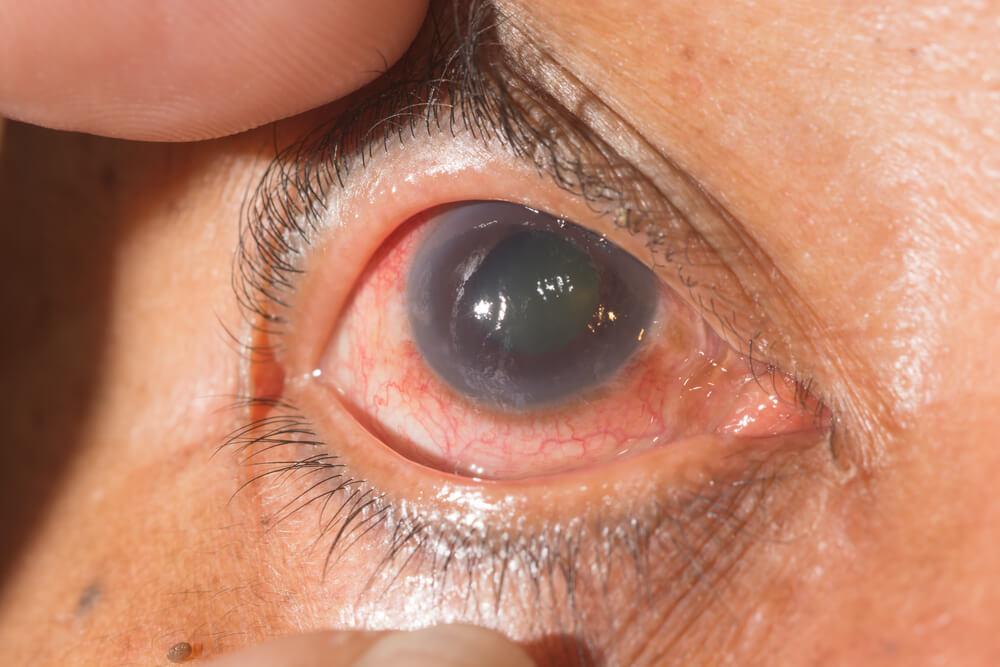
In acute angle-closure, the drainage angle blocks suddenly. Pressure rises within hours, causing severe eye pain, headache, nausea and vomiting, blurred vision, and rainbow halos around lights. This is an ophthalmic emergency requiring treatment within hours. Anyone with these symptoms should reach an eye hospital immediately.
Who Should Be Screened for Glaucoma?
Everyone over 40 should have a comprehensive eye examination including optic nerve assessment every one to two years. Screening should start earlier and be more frequent if you have a family history of glaucoma, are of African or South Asian descent, are highly myopic, diabetic, on long-term steroids, or have had a significant eye injury. A first-degree relative with glaucoma raises your own risk several-fold.
How Is Glaucoma Diagnosed?
Diagnosis is never based on pressure alone. We combine Goldmann applanation tonometry, corneal pachymetry, gonioscopy of the drainage angle, dilated optic disc examination, ZEISS CIRRUS HD-OCT 6000 scanning of the retinal nerve fibre layer, and Humphrey Field Analyzer 3 perimetry. Together these detect structural thinning years before a patient could ever notice a field defect.
How Is Glaucoma Treated?
Glaucoma cannot be reversed, but progression can be halted in the great majority of patients. Treatment begins with pressure-lowering eye drops such as prostaglandin analogues, beta-blockers, or carbonic anhydrase inhibitors. Selective laser trabeculoplasty (SLT) is a painless outpatient laser that improves natural drainage and can reduce or replace drops. minimally invasive glaucoma surgery (MIGS) and trabeculectomy are reserved for eyes needing greater pressure reduction.
How Do You Live Well With Glaucoma?
Take your drops exactly as prescribed, even though your vision feels normal — adherence is the single biggest predictor of long-term outcome. Keep every follow-up appointment, protect your eyes during sport, and encourage siblings and children to be screened. Book a glaucoma evaluation at FIO Hospital and give your optic nerve the head start it needs.
Book a glaucoma evaluation at FIO Hospital, learn more about glaucoma as a condition, or find your nearest FIO branch.