≡Table of Contents

Prof. Dr. Mushtaq Ahmad Khattak
CEO FIO Hospitals & Consultant Ophthalmologist
What Is Oculoplasty?
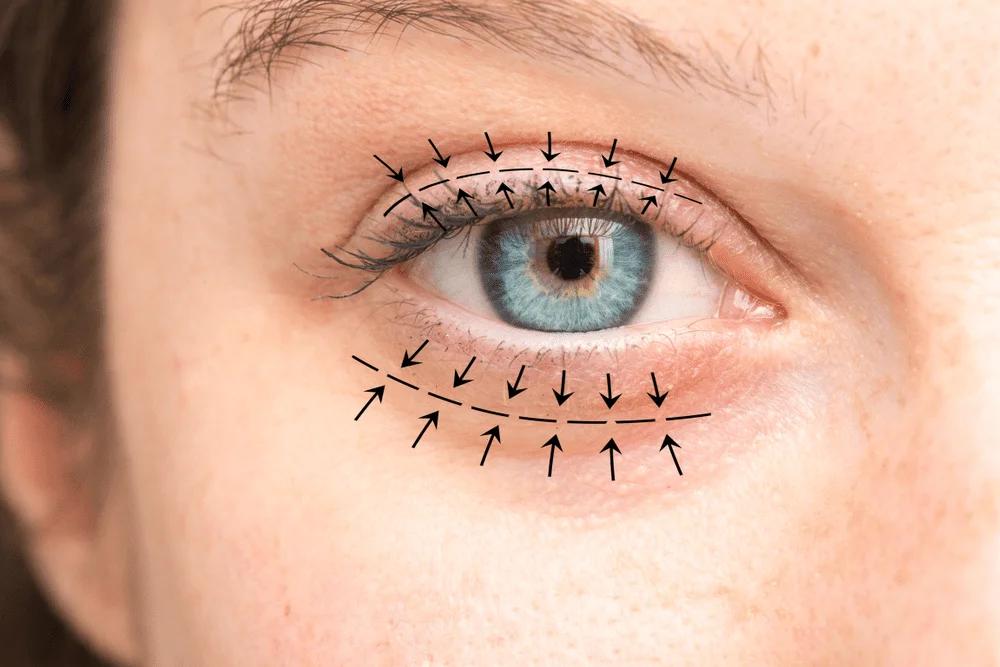
Oculoplasty is the subspecialty of ophthalmology dealing with the structures around the eye: the eyelids, eyebrows, tear drainage system, and the bony orbit. These structures protect the eye, spread the tear film with every blink, and drain tears away. When they fail, the consequences range from constant watering and infection to obstructed vision. Because this area also defines facial expression, oculoplastic surgery is uniquely both functional and aesthetic.
What Causes a Drooping Eyelid (Ptosis)?
Ptosis occurs when the muscle that lifts the upper lid weakens or detaches. In adults it is usually age-related, but it can follow trauma, contact lens wear, or neurological disease. When the lid covers the pupil it blocks the upper visual field, forcing patients to tilt their head back or lift the lid with a finger. In children, ptosis is more urgent — a covered pupil during visual development causes amblyopia. Surgical correction tightens or shortens the levator muscle and is usually performed under local anaesthesia.
What Are Entropion and Ectropion?
In entropion the lid margin turns inward and the lashes rub against the cornea, causing pain, redness, and eventually corneal abrasion. In ectropion the lid falls outward, exposing the eye and preventing tear drainage, leading to chronic watering and irritation. Both are corrected with short lid-tightening procedures that give immediate symptomatic relief.
Why Do Eyes Water Constantly?
Constant watering is not always dry eye — often the tear drainage channel is blocked. In infants, congenital nasolacrimal duct obstruction usually resolves with massage, but persistent cases need probing. In adults, dacryocystorhinostomy (DCR) creates a new drainage pathway between the tear sac and the nose. It can be performed externally or endoscopically, with high success rates and relief from years of watering and recurrent infection.
When Should an Eyelid Lump Be Checked?
Most eyelid lumps are benign chalazia or styes, managed with warm compresses and, if persistent, a minor incision and curettage. However, any lid lesion that bleeds, ulcerates, distorts the lid margin, or causes lash loss must be biopsied to exclude basal cell or sebaceous gland carcinoma. Early excision with margin control preserves both vision and appearance.
How Is Thyroid Eye Disease Managed?
Thyroid eye disease causes lid retraction, bulging eyes, dryness, double vision, and in severe cases pressure on the optic nerve. Management ranges from lubrication and medical therapy in the active phase to orbital decompression, squint surgery, and lid repositioning once stable. Orbital trauma, fractures, and tumours are also managed by the oculoplastic team.
Consult the FIO Oculoplasty Clinic
If you have a drooping lid, a watery eye, or a lump that will not settle, book an oculoplasty consultation at FIO Hospital for an assessment and a clear treatment plan.
Book an oculoplasty consultation at FIO Hospital, or arrange a visit at your nearest branch through our appointment page.