≡Table of Contents

Prof. Dr. Mushtaq Ahmad Khattak
CEO FIO Hospitals & Consultant Ophthalmologist
Why Does the Retina Matter So Much?
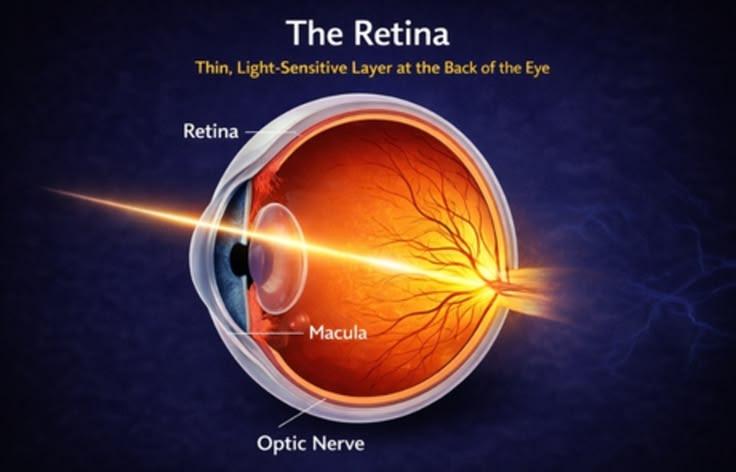
The retina is a paper-thin layer of light-sensitive tissue lining the back of the eye. It converts light into electrical signals that the optic nerve carries to the brain. Every image you see begins here. Because retinal cells cannot regenerate once they die, retinal disease is a race against time early diagnosis almost always means better vision preserved.
What Is Diabetic Retinopathy and Who Gets It?
Pakistan has one of the highest diabetes rates in the world, and roughly one in three people with diabetes develops some degree of retinopathy. Chronically high blood sugar damages the tiny retinal blood vessels, causing them to leak fluid and blood. In advanced stages, fragile new vessels grow and bleed into the vitreous cavity or pull the retina away. The frightening part is that vision can remain normal until the disease is advanced, which is why every diabetic patient needs a dilated retinal examination at least once a year.
What Are the Signs of Macular Degeneration?
The macula is the central part of the retina responsible for sharp, detailed vision reading, driving, recognising faces. In dry AMD, deposits called drusen build up and the tissue thins gradually. In wet AMD, abnormal vessels leak beneath the macula and vision can drop within days. Straight lines appearing wavy or a grey patch in the centre of vision are classic warning signs that need same-week assessment.
When Is Retinal Detachment an Emergency?
Sudden flashes of light, a shower of new floaters, or a dark curtain moving across your field of vision suggest the retina is tearing or detaching. This is a surgical emergency. Treated within hours to days, most retinas can be reattached with good visual outcomes. Delayed by weeks, central vision is often permanently lost.
How Is Retinal Disease Diagnosed?
We use ZEISS CIRRUS HD-OCT imaging to map the retina layer by layer at micron resolution, along with fundus photography and fluorescein angiography to trace leaking vessels. These scans are painless, take only minutes, and reveal disease long before symptoms begin.
What Are the Treatment Options for Retinal Disease?
Intravitreal anti-VEGF injections are the first-line treatment for wet AMD, diabetic macular oedema, and retinal vein occlusion. They are given under topical anaesthesia in a sterile theatre and take seconds. Focal and pan-retinal laser photocoagulation seals leaking vessels and prevents new ones. For detachment and advanced diabetic disease, vitreoretinal surgery vitrectomy with gas or silicone oil tamponade restores anatomy and vision.
How Can You Protect Your Retina?
Control blood sugar, blood pressure, and cholesterol. Stop smoking. Eat leafy greens and omega-3 rich foods. And most importantly, book an annual dilated retinal screening if you are diabetic, over 50, or highly myopic. Contact FIO Hospital to arrange a retina clinic appointment with our vitreoretinal team.
Book an appointment with our retina and vitreoretinal team, read more about diabetic retinopathy, or visit the Retina Centre of Excellence. Reserve your slot on the appointment page.