
loading loading
The Best Eye Hospital
  • Open: Mon-Sun: 08:00 AM - 10:00 PM
  • PRK
  • Femto LASIK
  • SMILE
  • SMILE Pro
  • IMPLANTABLE COLLAMER LENS - ICL
  • Refractive Lens Exchange - RLE
PRK

PRK

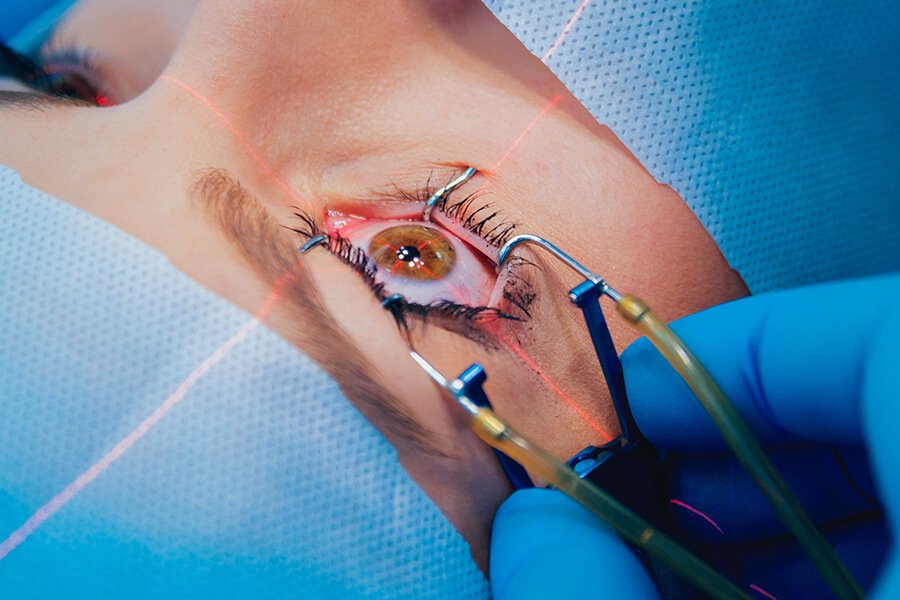
PRK is a laser refractive surgery that reshapes the cornea to correct nearsightedness (myopia), farsightedness (hyperopia), and astigmatism. Unlike LASIK, where the treatment is performed beneath a corneal flap, PRK is performed on the surface of the cornea.

Your consultant will discuss your lifestyle and visual goals in detail to help determine which procedure would be best for you.

PRK is a safe and effective vision correction procedure, especially suitable for patients with thinner corneas or those who may not be ideal candidates for LASIK. By reshaping the cornea directly on its surface, PRK helps improve visual clarity and reduce dependence on glasses or contact lenses. Although the recovery period may be slightly longer compared to other laser procedures, the long-term results are highly reliable, making PRK a trusted option for achieving clearer, sharper vision.
Healing & Result time

Because PRK is performed on the surface of the cornea, healing from the surgery takes longer. Patients who undergo PRK should expect a moderate degree of discomfort for a few days after surgery. This is because the top layer of the cornea, the epithelium, is removed during the PRK procedure. With the help of a bandage soft contact lens, the epithelium heals in a few days, at which point the pain resolves. Achieving your final clear vision after PRK also usually takes longer. Patients often experience fluctuating vision following PRK for several weeks as the cornea heals. During this time period, even though the vision is not immediately perfect, patients usually see well enough to resume work and drive within a few days following surgery.

Best Candidate for PRK

  • Ideally someone who is over 21 years old, when vision is more likely to have stopped changing
  • Your corneas are healthy.
  • Your prescription has to be one that can safely be treated with PRK.
  • Patients with thinner corneas.
Femto LASIK

Femto LASIK

Those interested in LASIK eye surgery will be glad to know that it is a safe and effective form of laser refractive surgery. It’s performed on the cornea to correct nearsightedness (myopia), farsightedness (hyperopia), and astigmatism. LASIK was first approved by the FDA in 1998.

Say goodbye to glasses and contact lenses, and hello to clear vision

LASIK technology allows unprecedented customization and accuracy, making it possible for the actual laser treatment to be fully customized to the unique characteristics of each of your eyes. This precise level of measurement and treatment can enable you to achieve the full potential of your personal best vision.
What is LASIK eye surgery?

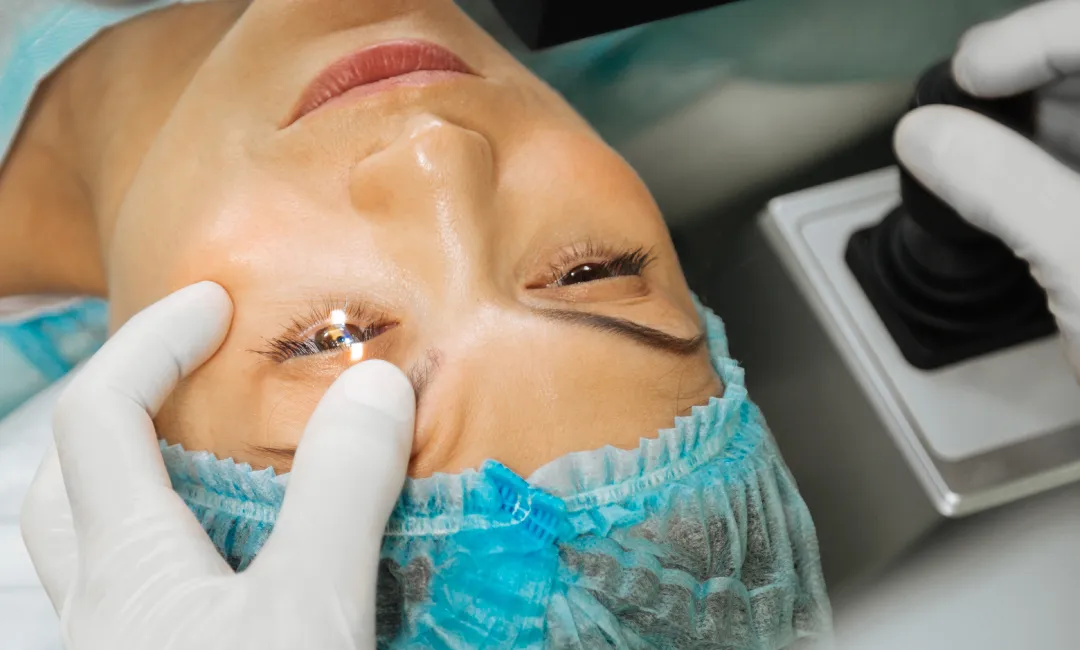
LASIK surgery is actually a two-part procedure. First, a flap is created in the cornea using a femtosecond laser. This very precise laser is able to cut a thin layer of cornea without damaging any of the surrounding tissue. This flap is then lifted out of the way, like a page of a book, and a second laser called the excimer laser is used to reshape the underlying cornea. The flap is carefully returned to its original position, and the procedure is complete. The entire procedure takes about twenty minutes with minimal to no pain. By performing the treatment under a flap, the eye is able to heal more quickly, and patients often notice clear vision the day after surgery.

Patients not ideal candidates for LASIK procedure

  • An unstable eye prescription.
  • Extreme levels of myopia, hyperopia, or astigmatism.
  • Your prescription has to be one that can safely be treated with PRK.
  • Keratoconus
  • History of certain corneal infections.
  • Other eye problems include severe glaucoma and cataracts.
SMILE

SMILE

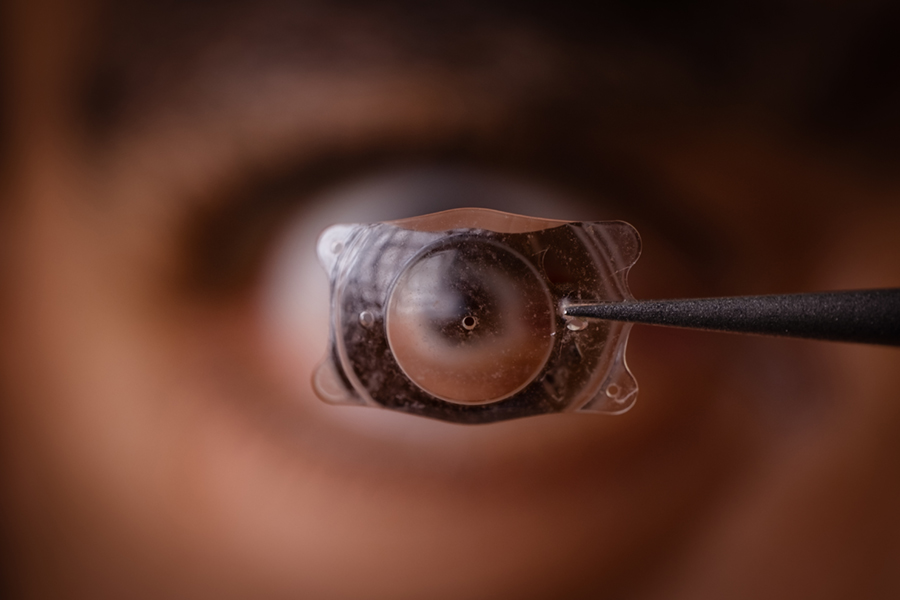
SMILE is a minimally invasive surgery. The name reflects how the procedure works. The laser creates a lenticule and a tiny incision, less than 4 millimeters long, to allow removal of the lenticule. Lenticules are disc-shaped pieces carved into your cornea by the laser.

Worldwide, surgeons have performed over 5 million SMILE procedures.

In a pre-surgery appointment, your surgeon will examine your eyes to confirm you don’t have any other eye diseases or conditions that mean you shouldn’t have SMILE surgery. They’ll map out plans to remove the lenticule from your eye.

What happens during this procedure?

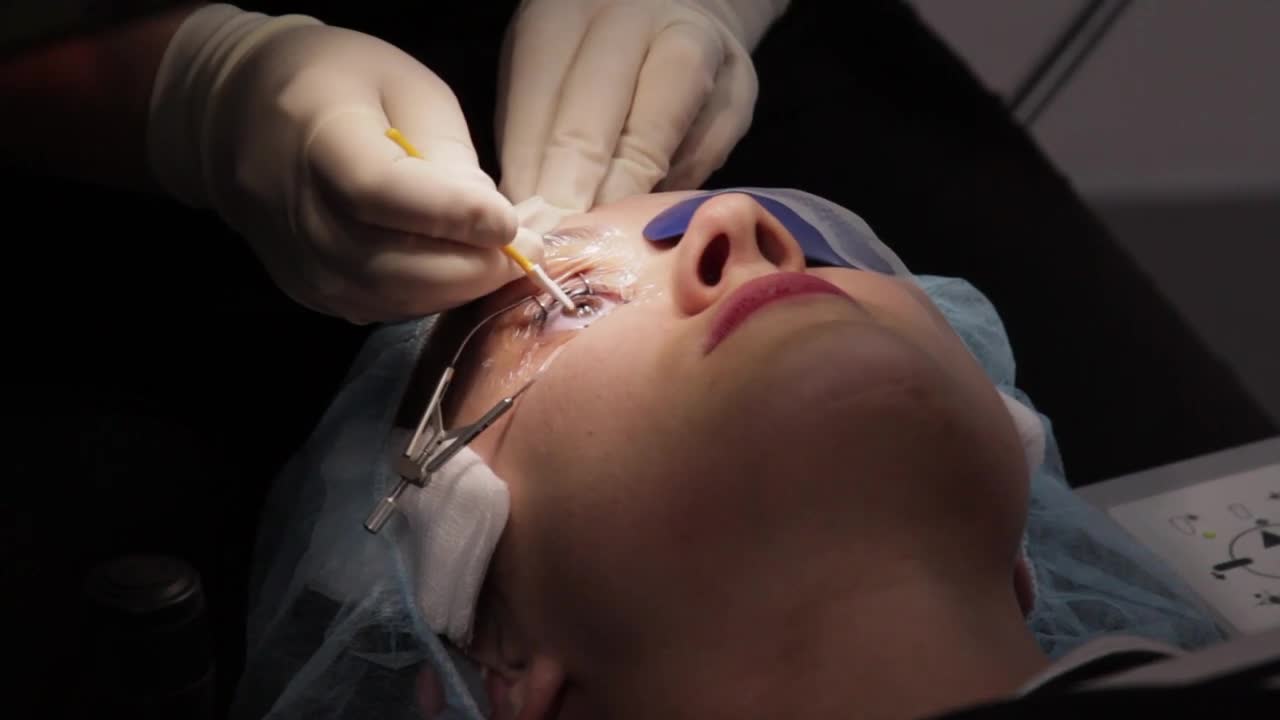
Your surgeon will numb your eye. They’ll use a femtosecond laser for the surgery.The laser will create a small disc of tissue from your eye that looks much like a soft contact lens. It will be thicker in the middle and thinner along the edges. This disc is the lenticule.Your surgeon will use the laser to make a small cut into your eye so they can remove the lenticule. By doing this, the surgeon changes the shape of your cornea and improves your vision. Your eye doesn’t need stitches and will heal in about one or two days.

Risks or complications of SMILE eye surgery

  • Finding a surgeon who has done this surgery a significant number of times.
  • Having halos and glare with lights, especially when it’s dark.
  • Needing another surgery to handle debris in your eye or to smooth out your cornea.
  • Wear protective eyewear after the surgery.
  • The SMILE procedure is a little newer than other eye surgeries.
SMILE Pro

SMILE Pro

SMILE Pro is the most advanced refractive surgery technology available, using the VisuMax 800 femtosecond laser to carve out a lens-shaped disc, or lenticule, in only 8–10 seconds per eye—three times faster than the original ReLEx SMILE.

Dr. Mushtaq Ahmad is a pioneering ophthalmologist in Pakistan, having performed over 3,000 SMILE Pro cases.

SMILE Pro helps patients regain visual freedom, remove lifestyle limitations, and pursue their desired career opportunities.
Why SMILE Pro?

LASIK eye surgery to correct refractive errors can be performed in two main ways: (1) Blade LASIK, which uses a blade to create a corneal flap, and (2) Femtosecond Laser LASIK (bladeless LASIK). Blade LASIK may result in an incomplete or uneven corneal flap, loss of natural corneal curvature, and an increased risk of infection.
SMILE Pro is the latest innovation in refractive surgery. Unlike traditional LASIK, it does not require creating a corneal flap, helping to maintain corneal strength, thickness, and natural curvature, while reducing the risk of infection. It is widely recognized in the ophthalmology community for its precision, safety, and effectiveness.

Advantage of SMILE Pro

  • Fast: SMILE Pro uses Femtosecond Laser technology with faster cut speeds, completing the procedure in only 8–10 seconds, making it three times faster than the original ReLEx SMILE.
  • Precise: The Visumax 800 ensures precision by accurately determining the corneal curvature based on ophthalmologist calculations. The AI-assisted ophthalmic machine has a high-performance digital sensor system that assists in determining the center point of lenticule creation and alerts the ophthalmologist if the eyeball position deviates from the calculated position.
  • Safe: SMILE Pro uses a femtosecond laser to open a corneal flap from the side without raising the corneal flap. Lower the risk of the eyeball retainer losing suction power due to eye movement, as well as infection complications from opening the corneal flap, etc.
  • Flapless Innovation: SMILE Pro is a Femtosecond Laser eye surgery innovation that eliminates the need to raise the corneal flap. This flapless procedure helps maintain post-surgery corneal curvature, reduces complications associated with creating a corneal flap, minimizes symptoms related to corneal flap movement, and diminishes the natural in-growth of epithelial cells under the corneal flap.
  • Very Small Incision: SMILE Pro corrects vision by adjusting the curvature of the cornea by removing corneal tissue, or lenticule, through a very small surgical incision of only 2-4 millimeters, which is 80% smaller than Femto LASIK, allows you to be pain-free during surgery, and hastens a quick recovery after surgery.
  • Minimal Downtime: Those who have had SMILE Pro typically use their clear vision the next day after the surgery.
IMPLANTABLE COLLAMER LENS - ICL

IMPLANTABLE COLLAMER LENS - ICL

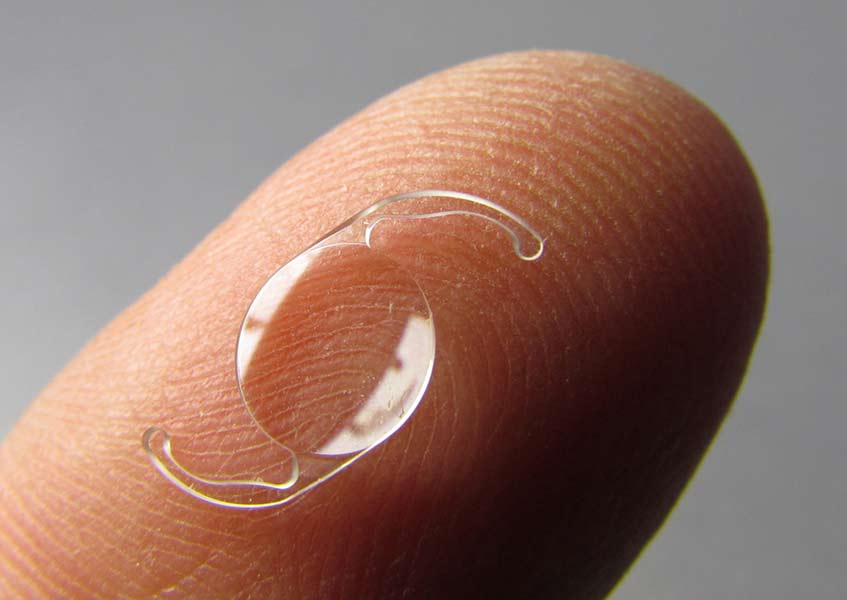
ICL surgery is a vision correction procedure that is FDA approved to treat nearsightedness (myopia) and astigmatism.ICL surgery is an FDA-approved vision correction procedure for treating nearsightedness (myopia) and astigmatism.This artificial lens is surgically implanted inside the eye, positioned between the iris (the colored part of the eye) and the natural lens.

Unlike laser refractive surgery such as LASIK or PRK—which reshapes the cornea—ICL places a corrective lens inside the eye without altering corneal tissue.

ICL surgery is intraocular surgery and therefore is performed in the sterile operating room to ensure maximum safety. Because the lens is placed inside the eye, it does not require daily replacement or cleaning like a regular contact lens.
Who is a good candidate for ICL surgery?

  • Ideally someone who is over 21 years old, when vision is more likely to have stopped changing, up to 45 years of age.
  • A stable eye prescription that has not changed significantly over the last year.
  • Your corneas are healthy.
  • Your overall eye health is good.
  • Your prescription has to be one that can safely be treated with ICL.
  • Patients with slightly thin or corneas irregular corneas.
  • Moderate to very high amounts of nearsightedness (myopia) and/or astigmatism.
  • A family history of certain corneal disease.
  • Patients with active lifestyles who desire a quick recovery
Refractive Lens Exchange - RLE

Refractive Lens Exchange - RLE

Refractive lens exchange surgery involves carefully removing the natural lens in the eye through a small incision and replacing it with an artificial intraocular lens implant.

Your consultant will have a detailed discussion with you about your lifestyle and goals to help determine which procedure(s) would be best for you.

This artificial lens implant is able to correct nearsightedness (myopia), farsightedness (hyperopia), astigmatism, and presbyopia (difficulty focusing up close) which reduces, or possibly eliminates, the need to wear glasses or contacts.

Refractive lens exchange age

Ideal candidates are usually 40 or older because they may face a lower risk of complications. Also, the surgery is most helpful in people who have started to develop presbyopia because they’ve already lost some of the natural near-focus capabilities related to aging. Presbyopia typically begins after age 40.

What does this procedure treat?

  • Nearsightedness.
  • Farsightedness
  • Age-related farsightedness (presbyopia).
  • Astigmatism.
Explore our esteemed corporate panels, top-tier organizations partnering with us for excellent eye care services.
corporate panels